Charting Player Pathways Across Digital Gaming Platforms
Written by Gisela Günther · Jul 21, 2026
Charting Player Pathways Across Digital Gaming Platforms
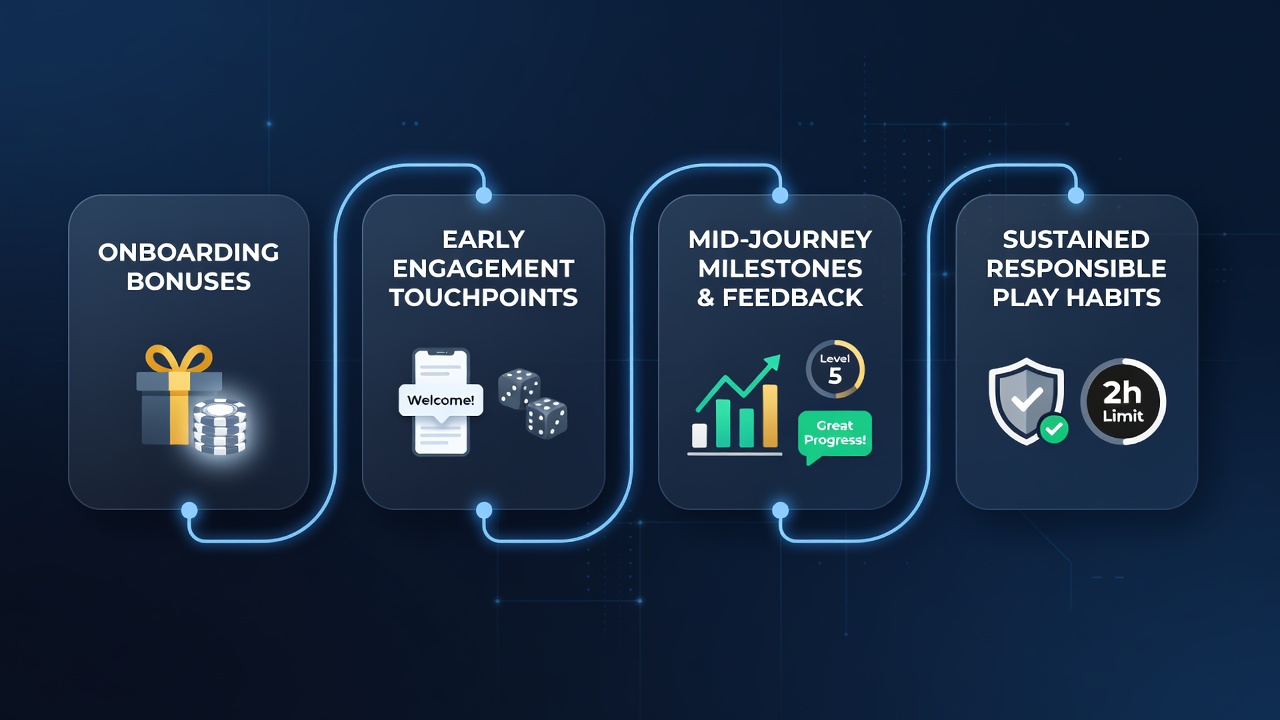
Operators map every interaction point that shapes how individuals move from first contact with a welcome bonus into patterns of sustained, measured participation. Data collected across platforms shows these touchpoints include registration incentives, deposit matches, tutorial modules, and built-in limit-setting features that appear at consistent intervals.
Initial Onboarding and Bonus Activation
Registration systems deliver onboarding bonuses within the first minutes of account creation, and operators record completion rates for identity verification steps that unlock those offers. Research from iGaming Ontario indicates that players who finish verification before claiming bonuses demonstrate higher retention across the first thirty days, while those who skip early education prompts show quicker shifts toward higher-risk deposit patterns.
Bonus structures often tie wagering requirements to session timers, and platforms insert responsible gaming messages at the point of bonus claim. Figures from the New Jersey Division of Gaming Enforcement reveal that mandatory pop-up disclosures about deposit limits during bonus activation correlate with a measurable drop in same-day overspending reports.
Early Engagement and Habit Formation
After the first deposit, platforms introduce session reminders and reality-check notifications that appear at fifteen-minute intervals. Operators track whether users adjust their time or spend caps during these prompts, and analytics show that players who set limits within the first three sessions maintain those boundaries longer than those introduced to the tools later.
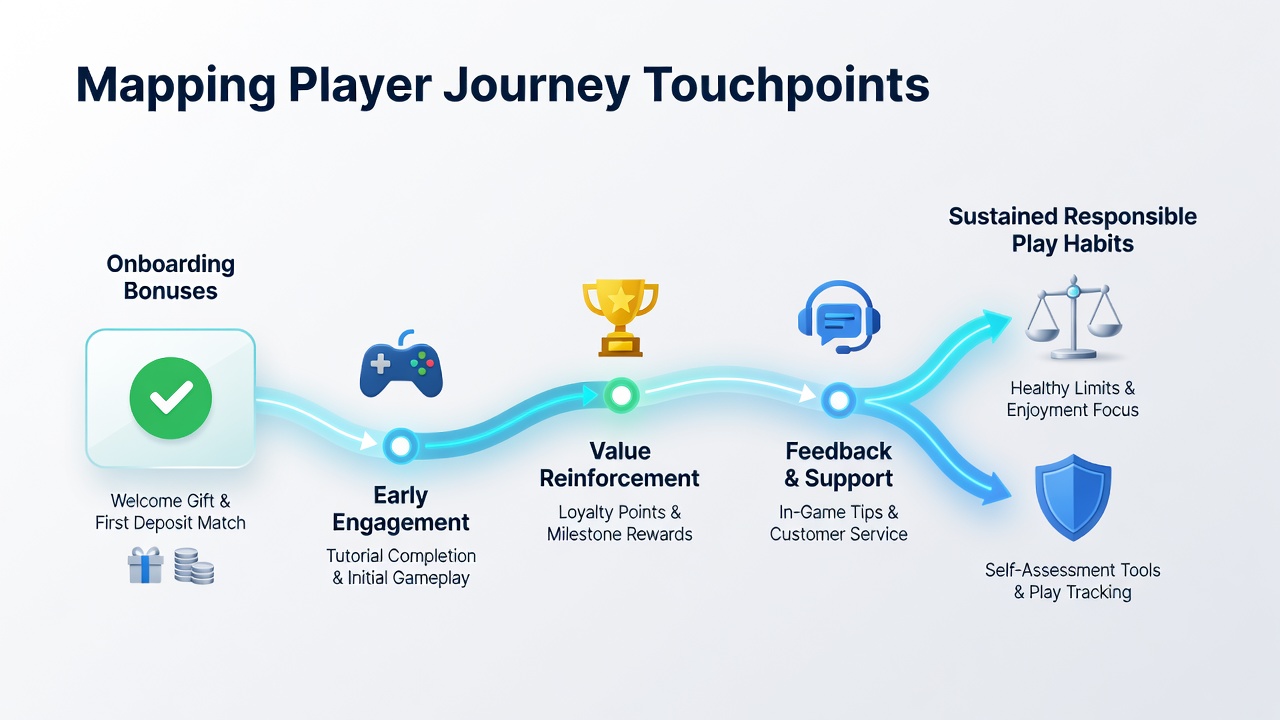
Loyalty programs link bonus progression to responsible play milestones, such as completing a set number of sessions without exceeding preset limits. According to data published by Gambling Research Australia, reward tiers that reward controlled participation rather than volume alone produce steadier month-over-month activity without corresponding increases in self-exclusion requests.
Mid-Journey Monitoring and Adjustment Tools
Cross-platform dashboards aggregate play history from desktop and mobile sessions, and players receive weekly summaries that highlight deposit frequency and average bet size. Those summaries include one-click access to cooling-off periods or temporary deposit reductions, and operators note that users who review these reports at least once per month record fewer instances of chasing losses.
Payment preference data also feeds into risk models, with e-wallet transactions often flagged for faster velocity than bank transfers. Platforms that surface spending velocity alerts during checkout see higher voluntary adoption of daily caps, according to internal metrics shared by several Canadian provincial operators.
Transition to Sustained Responsible Patterns
Long-term engagement hinges on reward systems that continue to reinforce limit adherence rather than raw volume. Case studies from multiple jurisdictions show that players who receive personalized messages celebrating milestone achievements in responsible play, such as ninety consecutive days within budget, demonstrate lower rates of account closure due to problem gambling indicators.
Seasonal events in July 2026 incorporated additional touchpoints, including tournament opt-in screens that required confirmation of current limit settings before entry. Regulators observed that these extra checkpoints produced a temporary uptick in players adjusting their caps downward before participating in high-stakes promotions.
Conclusion
Mapping these sequential touchpoints allows operators to identify where interventions most effectively steer behavior toward sustained, self-regulated play. Continued collection of interaction data across regions will refine how onboarding incentives connect with later-stage tools, creating clearer pathways from initial bonuses to enduring responsible habits.